The Errand Outfit for the First Week Back to School

Quick Answer: Build around one smart-neutral bottom, a top with sleeves you can push up, a layer for air-conditioned indoor stops, and shoes you could walk two miles in. The back-to-school errand day is defined by repeated in-and-out transitions between a hot car park and a cold building, and that temperature cycling is what breaks most outfits.
It is also the day most likely to include an unplanned conversation with someone you were not expecting to see, which is why the outfit needs a floor rather than a ceiling.
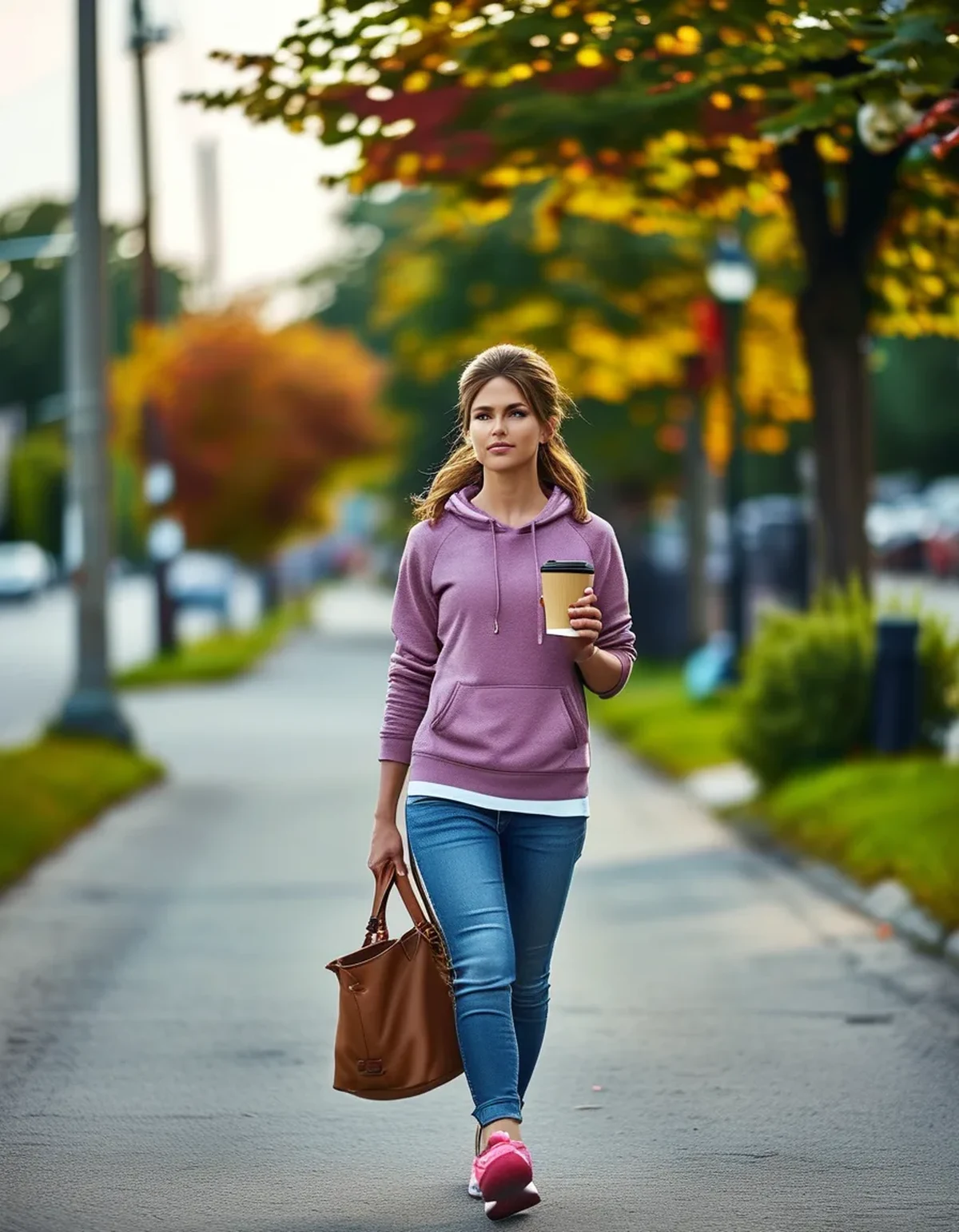
What makes the back-to-school errand day different?
It is the specific combination, not any single element.
The stops are of different formality. A school office, a supermarket, a pharmacy, a returns counter, and possibly a teacher introduction. Nothing is formal, and one or two of them are semi-public in a way that a Saturday supermarket run is not.
The temperature cycles repeatedly. Late August means a hot car park, a heavily air-conditioned store, back to the car, into a school building that may or may not have cooling. Five or six cycles in three hours is genuinely more demanding on an outfit than a single hot day.
You are carrying things. Forms, bags, a returned item, groceries. Hands are occupied, which means anything requiring adjustment stays unadjusted.
The timing is fragmented. Twenty minutes here, ten there, with driving between. There is no point at which you can go home and change, and the day frequently extends past its plan.
And the walking adds up. Car parks, aisles, a school corridor, a return trip for the thing you forgot. Two to three miles across a morning is normal, mostly on hard surfaces, and it is the shoe decision that people regret most.
What is the bottom half?
This is the decision that sets the tone for everything else.
A straight-leg or wide-leg technical trouser in a neutral is the strongest option. It reads as clothing rather than as gym kit, it moves freely, and it handles both a school office and a supermarket without any adjustment.
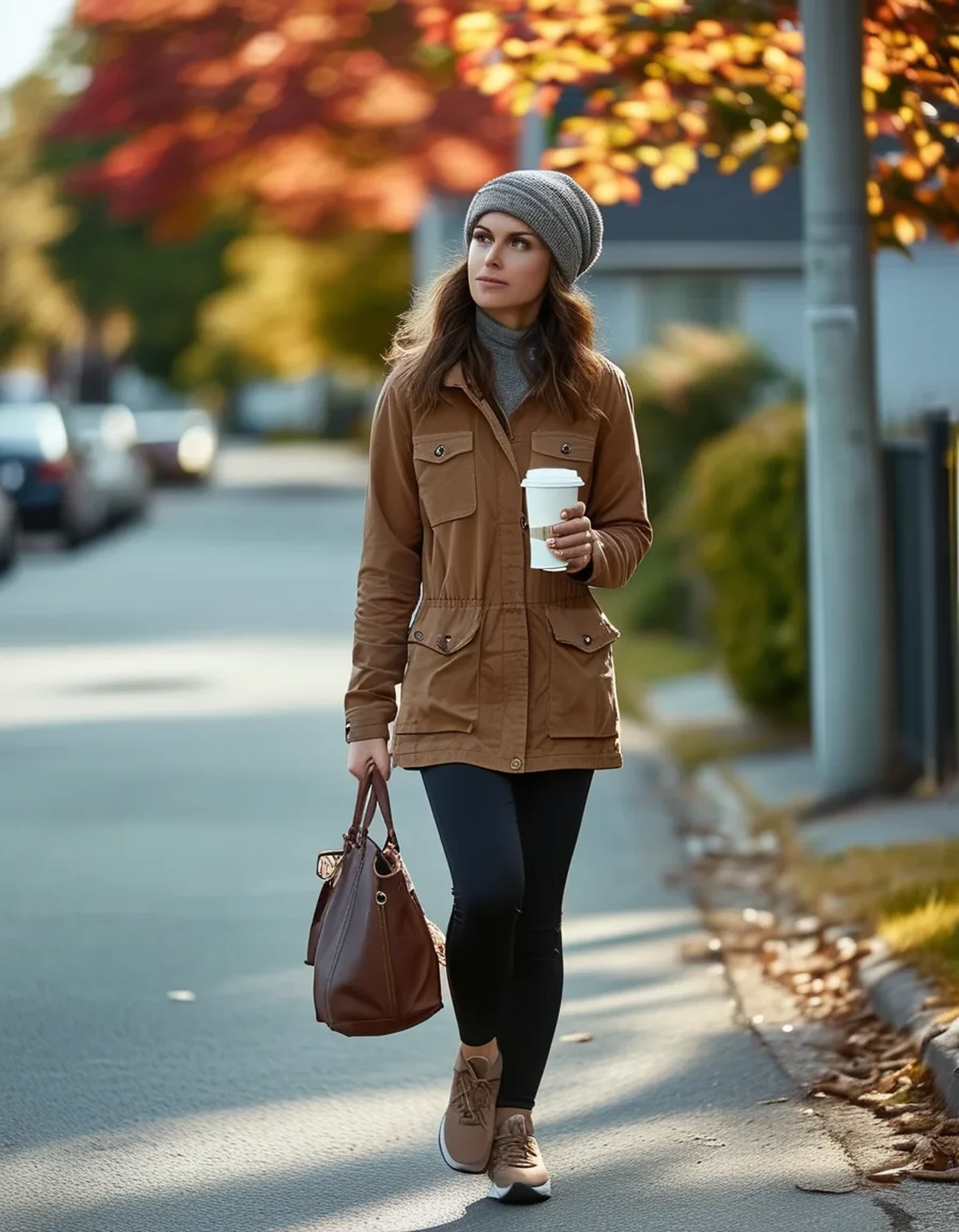
A full-length legging in a dense fabric works if the top is long enough to cover comfortably and the fabric is genuinely opaque. The failure mode is a thin legging plus a short top, which is fine at home and less fine bending into a car boot in a car park.
Avoid anything cropped mid-calf. It is the length that reads least deliberately, and it leaves an ankle exposed to cold air conditioning while offering nothing on a hot walk.
Pockets are close to essential. Phone and keys need to be reachable while carrying things. A trouser with two real pockets removes a whole category of small frustrations from the day.
Colour: mid to dark neutrals. Not because light colours are wrong, but because this specific day involves a supermarket, a car, and possibly a child, and a light bottom does not survive all three.
What goes on top?
Two pieces, and the second one is the one people skip.
A top with sleeves you can push up. Three-quarter or full length in a light fabric. This single feature handles the temperature cycling better than any other garment choice — you push them up in the car park and pull them down in the store, without needing a free hand for more than a second.
A layer that can live in the car. A light knit, a shirt, or a zip. It does not need to be worn all day; it needs to be reachable when the third air-conditioned stop turns out to be the cold one. Leaving it in the car rather than carrying it is the whole point.
Avoid sleeveless as the only option. A bare arm in aggressive air conditioning is the most common complaint about this exact day, and it is entirely preventable.
Neckline matters more than usual. You will be bending, reaching, and lifting repeatedly. A higher neckline removes a recurring low-level adjustment that otherwise happens twenty times.
And one considered detail. A structured bag, a decent watch, or a good pair of sunglasses. The day includes at least one unplanned encounter, and a single deliberate element changes how the whole outfit reads without adding any effort.
Myth vs Fact: errand day dressing
Myth: Nobody notices what you wear on an errand day. Fact: Largely true and beside the point. The reason to dress deliberately is how it affects your own conduct across a fragmented, slightly stressful morning, not how it is perceived. That effect is real and it is why the advice persists.
Myth: Comfortable means loose. Fact: Loose clothing needs constant adjustment when you are moving, bending, and carrying. Fitted-but-stretchy is more comfortable across three hours of activity than anything that shifts.
Myth: You should dress for the hottest part of the day. Fact: The hottest part is the car park, which you are in for ninety seconds at a time. You spend far longer inside cold buildings, and dressing for the ninety seconds means being cold for two hours.
Myth: Trainers are always the practical shoe. Fact: They are usually right, and a supportive flat loafer or a clean slip-on is often better — easier on and off, no laces, and slightly more versatile across the formality range. What matters is that you have walked in them before, not what category they belong to.
Myth: A tote is enough bag. Fact: A tote occupies a hand permanently. A crossbody plus a folded tote in it means your hands are free until you need to carry something, which is the actual requirement.

FAQ: Errand Outfit Questions, Answered
What if the day might run into an evening thing?
The straight-leg trouser plus a plain fitted top is the version that upgrades with a change of shoes and one accessory. Keep both in the car. That is a genuinely small amount of preparation for a large amount of flexibility.
How do I stop feeling scruffy by stop four?
The most common causes are a top that has ridden up, hair that needs redoing, and shoes that were the wrong choice. Fitted-but-stretchy fixes the first, something to tie hair back fixes the second, and the third is a decision you made in the morning.
Does this change once autumn arrives?
The structure holds; the layer becomes worn rather than carried, and the shoe wants a sock. From October the car-park-to-cold-store cycle inverts, and the layer you were taking off becomes the one you keep on.
TL;DR:
- The defining problem is five or six hot-to-air-conditioned transitions in three hours, not the outdoor temperature.
- A straight-leg technical trouser in a mid-to-dark neutral, with real pockets, does the most work.
- A top with sleeves you can push up handles the temperature cycling better than any other single garment choice.
- Keep a light layer in the car rather than carrying it, and use a crossbody with a folded tote inside.
- Shoes you have already walked two miles in — this day is longer on foot than it looks on paper.
Dress for the cold buildings, not for the car park. You are in one of them for two hours and the other for ninety seconds.
See It in Motion
Seen here: High Waist Yoga Leggings with Side Pockets — shop it on bubblelime.com
Keep Reading
This article is for general informational and styling purposes only. Fit, sizing, and product availability may vary.