The Back-to-School Errand Outfit: Six Stops, Four Temperatures, One Look

Quick Answer: A multi-stop late-summer errand morning spans hot parking lots, over-cooled stores, a school building, and possibly an unplanned social encounter. Build it on a breathable base that reads as put-together on its own, add one light layer that ties or drapes without bulk, and prioritize hands-free carrying and real pockets over everything else — because you will be holding things at every stop.
Six stops, three hours, and somewhere in the middle you will run into someone you know while carrying a case of water.
This is the specific outfit problem of late August, and it is more about logistics than style.
Why is the back-to-school errand run harder than a normal one?
Because it stacks four different problems that usually arrive separately.
The temperature range is unusually wide. A parking lot in late August radiates stored heat and can feel dramatically hotter than the air temperature. Big box stores run their air conditioning aggressively. School buildings are often somewhere in between and frequently warmer than either. You will cross that range six times in three hours, and the outfit has to handle all of it.
The dress code range is wide too. A hardware store and a grocery store have no expectations. A school office, a teacher meeting, or an unexpected conversation with other parents sits at a different register. Most errand outfits are built for the lowest common denominator, which is what makes the school stop feel awkward.
Your hands are full at every stop. Bags, a phone, a list, keys, coffee, and possibly a child’s hand. This is the constraint that should drive the outfit, and it is the one people plan for last.
You are in and out of a car repeatedly, which rules out anything that wrinkles badly, anything that shifts when you sit, and anything you have to adjust each time you get out.
The realistic goal is not looking great in a photograph. It is one outfit that is comfortable for three hours, functional under load, appropriate at the highest-register stop, and requires no adjusting.
What should the base outfit be?
Two rules do most of the work: breathable enough for the parking lot, structured enough for the school office.
On the bottom half — prioritize pockets and structure.
- A relaxed wide-leg or straight pant in a breathable woven is the strongest option. It reads as more considered than a legging, moves air, does not cling in a hot lot, and usually has real pockets.
- A structured jogger or a tapered pull-on pant works nearly as well and is more comfortable in and out of a car.
- Leggings work if the top does the elevating — a longer, structured top, and non-athletic shoes.
- Avoid anything that wrinkles hard. Linen looks wonderful for eleven minutes and then looks like you slept in the car.
On the top — one step above a t-shirt.
A short-sleeve knit with some structure, a fitted tee in a good fabric, or a simple sleeveless top with a defined neckline. The upgrade over a basic tee is fabric quality and fit, not complexity. A well-fitting plain top in a good fabric reads as deliberate; a slightly tired one reads as an afterthought, and they cost the same amount of effort to put on.
Fabric priorities: breathable, fast-drying, and wrinkle-resistant, in that order. You will sweat in the parking lot and then sit in air conditioning, and cotton holds that dampness.
Color: mid-tones and small prints hide the reality of the morning better than pale solids. This is practical, not pessimistic.
What handles the temperature swings and the carrying?
The layer: one light piece that solves the store air conditioning and looks intentional at the school stop.
- An unstructured shirt worn open is the most versatile — functions fully open in heat, buttoned or half-tucked in cold stores, and elevates the whole outfit at the school office.
- A fine-gauge cardigan or knit works and packs smaller, though it reads slightly more casual.
- A very light unlined blazer is the strongest option if any stop involves a meeting.
It has to look good carried, because it will be over your arm or in a bag for most of the morning. Bulky fleece and anything with a large hood fail this test.
Carrying — this is the part that actually determines how the morning goes.
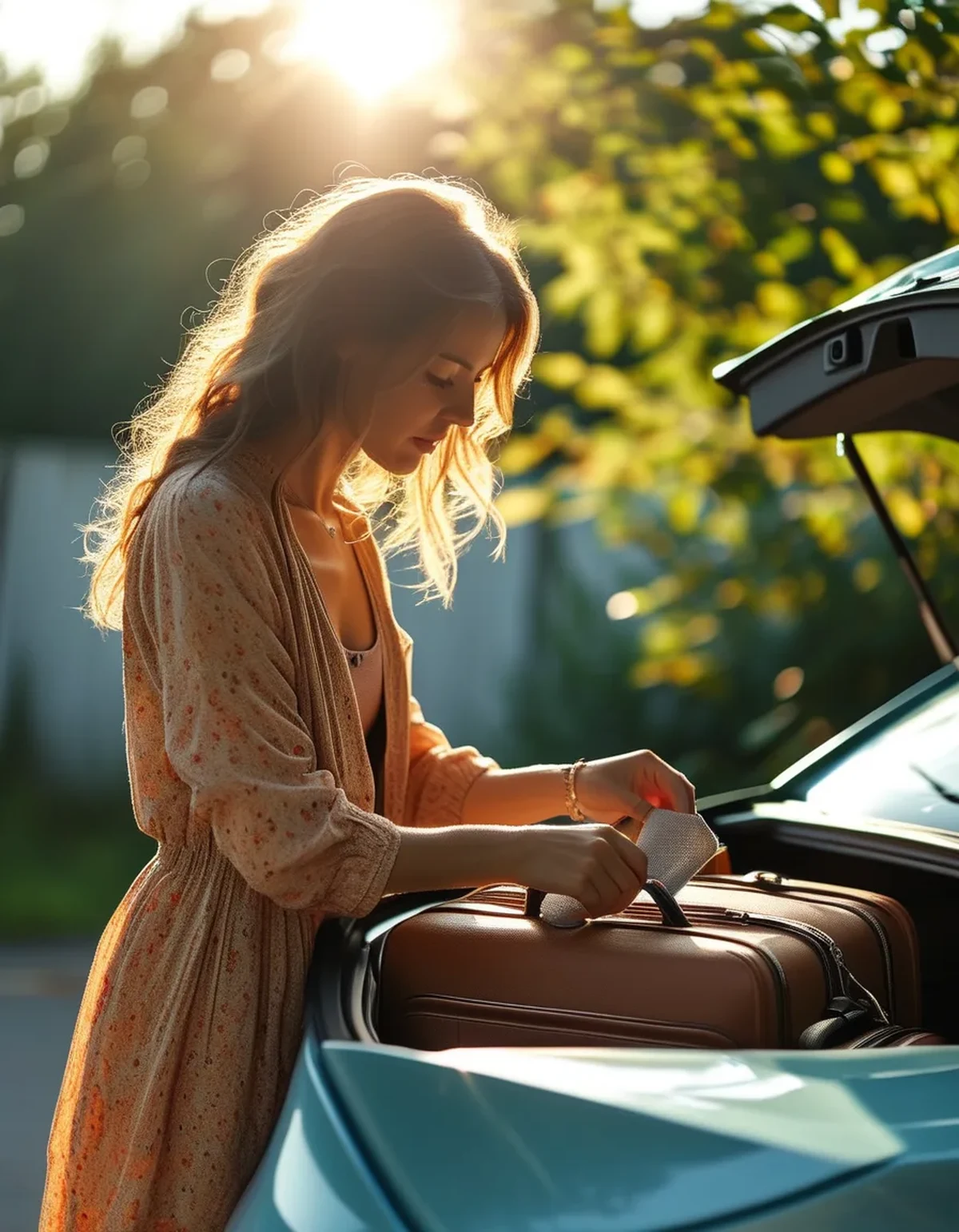
- Hands-free is not negotiable. A crossbody bag or a backpack. A tote that requires a hand or a shoulder to stay in place is one hand you do not have.
- A crossbody with a zip closure beats an open tote for anything involving a car and a parking lot.
- Real pockets in the pant for the phone and keys, so you are not opening a bag at every stop. This is the single biggest practical upgrade available.
- Consider a small pouch inside the bag for the things you need at every stop — keys, phone, card — so you are not excavating.
Shoes: a clean leather or canvas sneaker, a supportive flat, or a low block heel. You will walk more than you expect, across hot parking lots and store aisles. Comfort is the priority and there is no version of this morning where a heel above two inches is the right call.
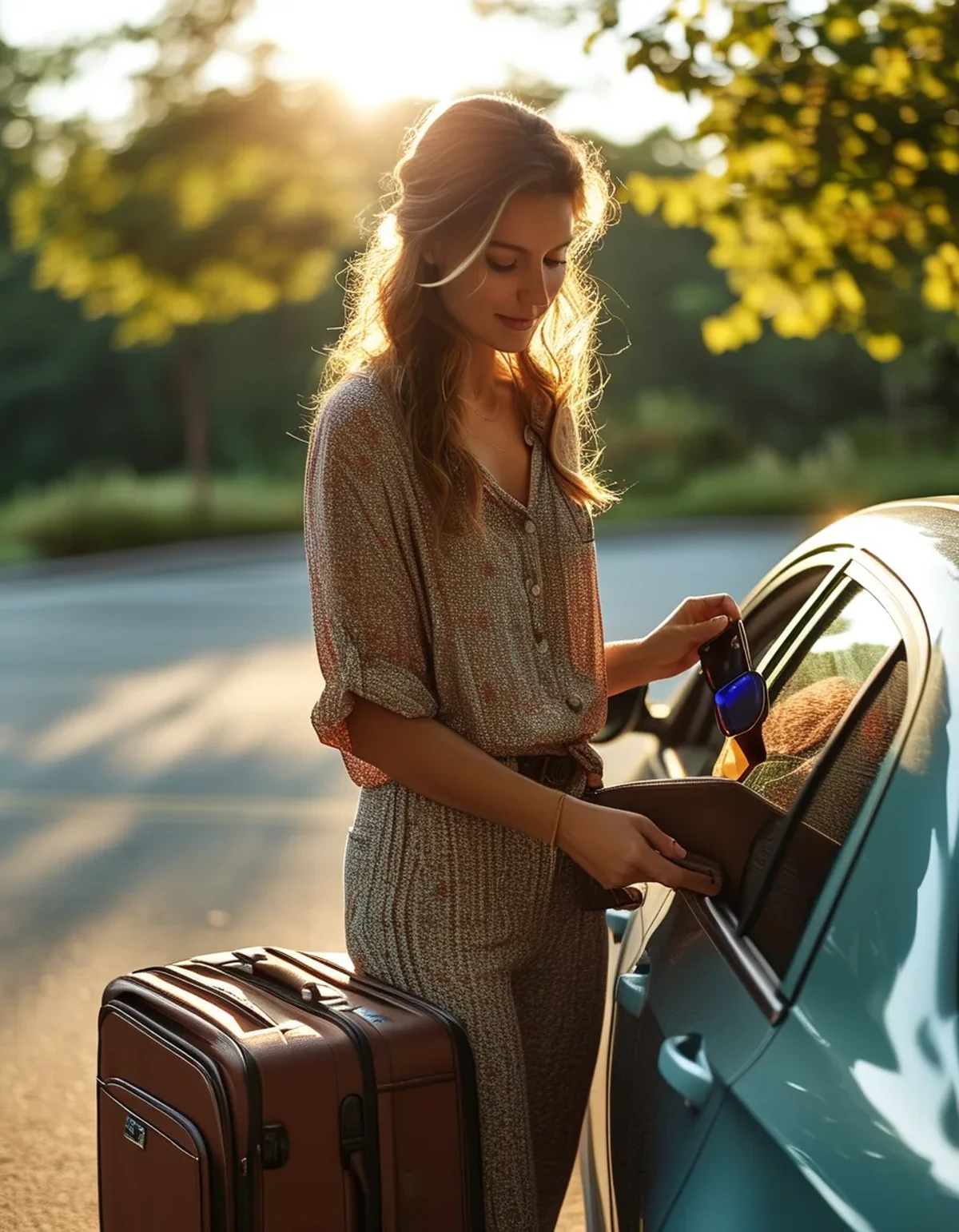
Sunglasses that stay on your head rather than in the bag. You will go in and out of buildings a dozen times.
What Nobody Tells You About Multi-Stop Errand Outfits
Parking lots are the hottest part of the trip, and nobody dresses for them. Asphalt radiates stored heat upward, and the walk across a large lot in late August can feel far hotter than the forecast. If you dressed for the air temperature, you dressed for the wrong place.
You will be photographed and you will not be expecting it. School drop-off, a first-day photo, a run-in with a friend. This is the actual reason to spend three extra minutes on the outfit — not vanity, just not wanting to avoid the camera.
Car seats leave marks on certain fabrics. Deep-textured seats and thin light-colored fabrics produce visible imprints that show up when you stand at the next stop. Mid-tone and slightly heavier fabrics do not.
Sunglasses on your head ruin a hairstyle and then you cannot take them off. A minor thing that recurs six times in one morning. A hat solves it more elegantly, and late summer sun makes one useful anyway.
Store air conditioning is coldest at the entrance. The blast at the door is not representative of the whole store, and people put a layer on at the entrance and overheat twenty minutes later in the aisles. Wait three minutes before deciding.
The unplanned stop is the one that matters. Every multi-stop morning acquires an extra stop — a pharmacy, a return, a coffee. Build the outfit for one more stop than you planned, and one register higher than the highest one on the list.
Comfortable shoes are worth more than every other decision combined. Three hours and six stops is a lot of walking, most of it on hard surfaces. Nothing about the outfit matters if your feet hurt by stop four.
How does this shift as the season turns?
Late August into late September changes this outfit substantially, and in a specific direction.
Now — late August. The dominant problem is heat outside and air conditioning inside. Breathable base, very light layer, cropped or full-length depending on the day, and sun protection. The layer often stays in the bag.
Mid-September. Mornings turn genuinely cool while afternoons stay warm, so the swing inverts — you need the layer at the start of the morning and not at the end. This is a different problem from the current one, and it favors the shirt or cardigan over the blazer.
October. A single warmer outfit works for the whole morning, with the layer worn continuously. The multi-temperature problem largely disappears.
Two things worth setting up now for the next two months:
A default outfit you do not have to think about. Multi-stop mornings usually start early and under time pressure. An outfit formula you can assemble without deciding is worth more than a better outfit you have to compose. Base, layer, shoes, bag — pick your version once and repeat it.
A permanently packed bag. Reusable shopping bags, a water bottle, sunglasses, and a small pouch with keys and cards. The thing that makes the morning stressful is not the clothes; it is realizing at the third stop that the bags are still by the front door.
That is the actual conclusion here: the outfit is a small part of it, and the logistics are most of it. Solve the carrying and the temperature range, and the outfit becomes simple.
FAQ: Errand Outfit Questions, Answered
Can I just wear leggings for the whole morning?
Yes, if the top and shoes do the elevating — a longer structured top and non-athletic shoes. What makes an errand outfit read as gym clothes is the combination, not the leggings alone.
What is the single most useful upgrade?
Real pockets in the pant, so your phone and keys are not in a bag you have to open at every stop. It changes the morning more than any styling choice.
How do I look put-together when I am carrying six bags?
Hands-free carrying and a fitted base. Bulk in your hands reads fine; bulk in the clothing is what makes the whole thing look chaotic.
What shoes for a lot of walking and a school stop?
A clean leather sneaker or a supportive flat. Both read as appropriate at a school office and handle three hours of hard surfaces without complaint.
TL;DR: The back-to-school errand morning is a logistics problem wearing an outfit problem’s clothing.
- Four climates in three hours: hot parking lots, over-cooled stores, a school building, and the car.
- Base: breathable, wrinkle-resistant, mid-tone, one step above a t-shirt. Structure over softness.
- One light layer that looks good carried — an open shirt is the most versatile.
- Hands-free carrying is not negotiable, and real pockets in the pant are the biggest practical upgrade.
- Dress for the parking lot, which is hotter than the forecast, and for one register higher than your highest stop.
- Comfortable shoes outweigh every other decision.
- Build a repeatable formula and a permanently packed bag — you will do this a dozen times before October.
Check your pants for real pockets. That is the first fix.
See It in Motion
Seen here: High Waist Yoga Leggings with Side Pockets — shop it on bubblelime.com
Keep Reading
This article is for general informational and styling purposes only. Fit, sizing, and product availability may vary.