The Errand Outfit That Survives a Surprise August Thunderstorm

Quick Answer: The storm-proof errand outfit is quick-dry technical bottoms in a dark color, a synthetic or blend top that will not turn transparent, shoes with grip that can get wet without being ruined, and a packable layer that lives in your bag or car rather than on your body. Cotton and suede are the two materials that turn a ten-minute soaking into a three-hour problem. Everything else is negotiable.
The radar looked clear when you left. Forty minutes later the sky goes green-gray in the produce aisle, and the walk from the store doors to your car - thirty seconds, maybe - is enough to soak a cotton outfit through. August storms do not reward preparation you have to remember. They reward preparation you got dressed in.
Why are August storms a different problem than regular rain?
Because of how they arrive and what follows them.
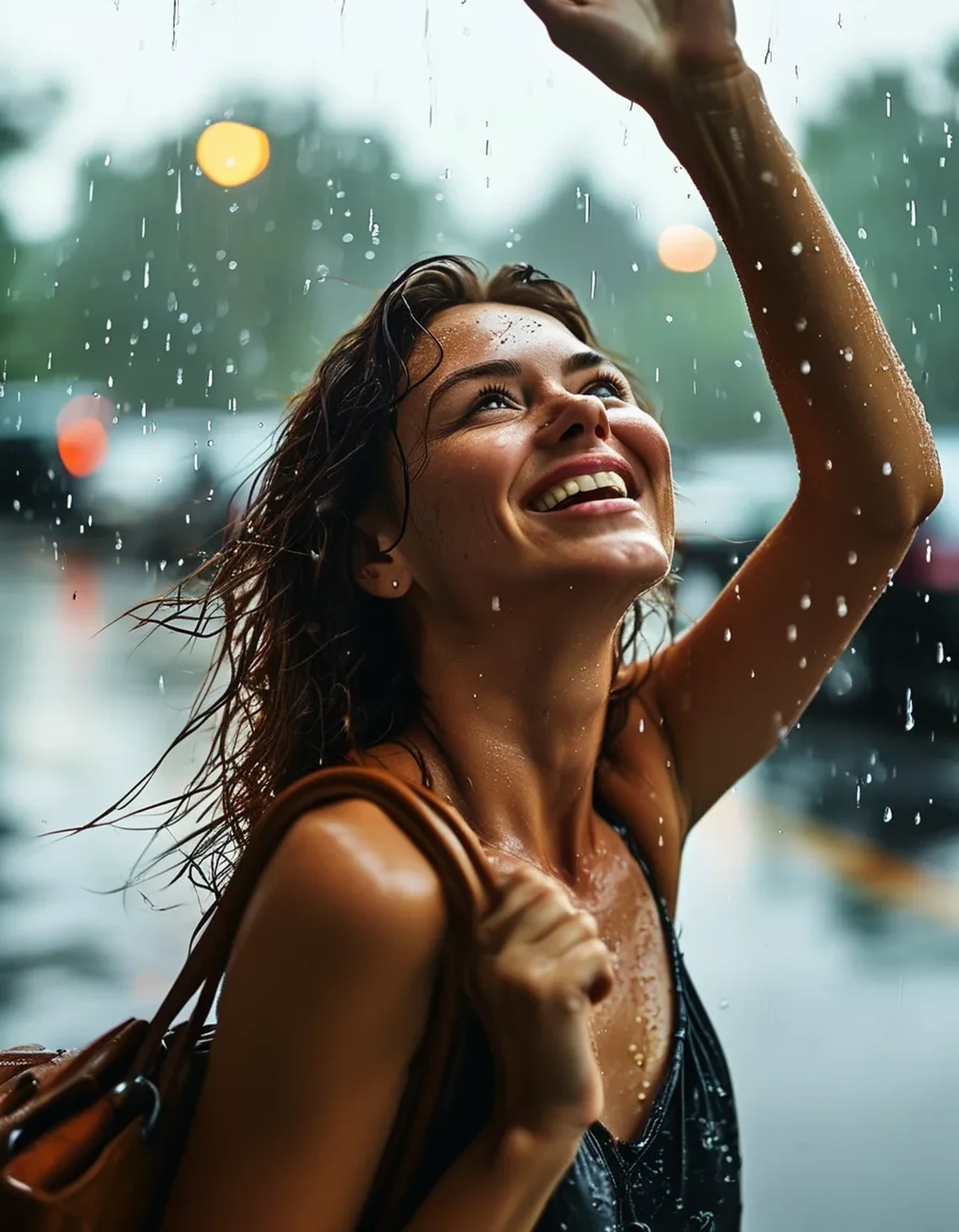
They give almost no warning. Pop-up thunderstorms build from afternoon heat and humidity in under an hour, dump hard for ten to twenty minutes, and move on. A morning forecast of 30 percent chance means most of your area stays dry while some unlucky stripe gets an inch - and you cannot know which stripe until it is on top of you.
The rain is heavy, not gentle. This is not drizzle you can walk briskly through. A summer downpour can soak fabric to saturation in the time it takes to cross a parking lot. Umbrellas help less than expected because the rain often comes with gusty wind that renders them decorative.
The after is as bad as the during. Ten minutes after the storm, the sun is usually back out and the air turns to steam. Now you are in soaked clothes in 85-degree, 90-percent-humidity air - cotton will not dry for hours - and then you walk into a supermarket air-conditioned to 68F. Wet fabric plus aggressive AC is genuinely cold, in August, which nobody believes until it happens to them.
And errand days multiply exposure. One dash to the car is survivable in anything. An errand loop is four or five dashes - store to car, car to pharmacy, pharmacy to car - and each one re-soaks whatever had started to dry.
The insight that changes the packing list: you cannot avoid getting wet. The goal is an outfit for which getting wet is a five-minute event instead of an afternoon-defining one. That is entirely a materials decision, made at the closet, before you knew it would rain.
What should the storm-day errand outfit be made of?
Build it bottom-up, by drying speed.
Bottoms: dark technical fabric, fitted or straight. This is where the storm outfit is won. Polyamide and polyester knits - the same fabric family as your workout leggings - absorb a fraction of what cotton does and release it fast. A dark pair of bootcut leggings in a dense matte knit is close to ideal: they read as normal trousers in every store, hide water marks completely, and go from soaked to merely damp in about twenty minutes of AC. Buttery-soft leggings styles dry even faster because the knit is thinner. The items to leave home: denim, which drinks water and holds it against your skin for half a day, and linen trousers, which turn to wet tissue.
Top: synthetic or blend, mid-tone, not white. A white or pale cotton tee is the single most predictable storm casualty - transparency plus cling plus a three-hour dry time. A polyester-blend tee, a dark tank, or a lightweight technical top handles the same soaking invisibly.
Shoes: rubber-soled, closed or confidently open. Two working strategies. Either shoes that can be fully wet without damage - rubber slides or sport sandals, dried with one paper towel - or trainers with real tread and a synthetic upper that will be dry by tomorrow. The failures are suede anything, leather flats with slick soles on wet polished store floors, and any shoe you would grieve.
The layer: packable, in the bag, not on you. A featherweight packable rain shell or even a compact windbreaker spends the whole summer stuffed in your tote or glovebox weighing nothing. Its real job is the after-storm supermarket AC as much as the rain itself.
Hair and bag, since they are part of the outfit: a claw clip in the bag turns storm hair into an updo in ten seconds, and a zip-top tote or one with an inner pocket keeps your phone and receipts dry while the canvas takes the hit.
What Nobody Tells You About Getting Caught in Summer Rain
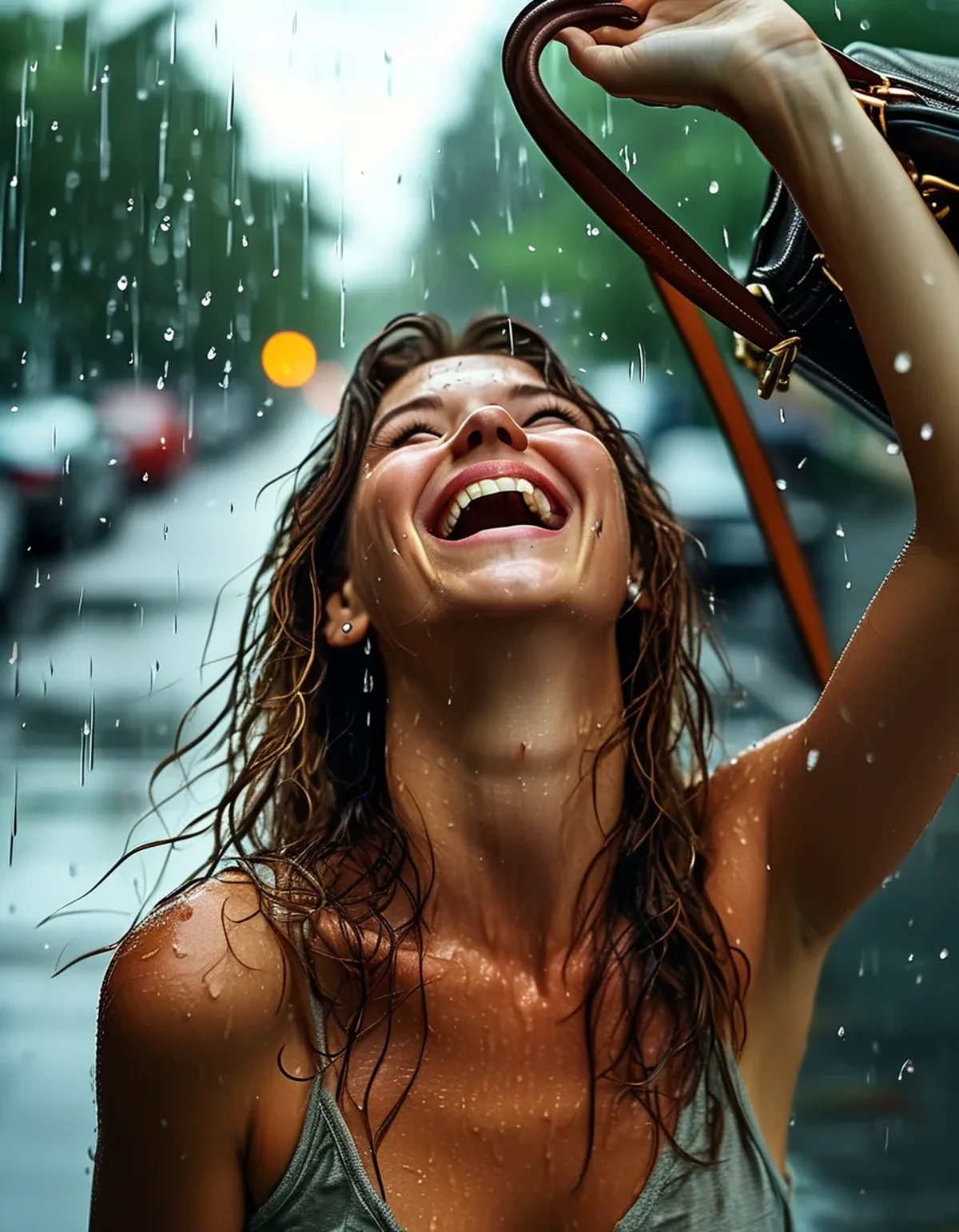
The AC afterward is the actual misery. The rain is warm - being rained on in August is briefly almost pleasant. What ruins the next two hours is standing in a 68-degree store while wet. This is why the packable layer earns its place even if you never wear it in the rain itself: it goes on over damp clothes indoors and the whole problem shrinks.
Denim is the worst-case garment, worse than a dress. Soaked denim gains pounds, chafes with every step, wicks water upward past where the rain reached, and stays wet until evening. Every other bottom in your closet outperforms it in a storm.
Slick store floors are the real physical risk. Polished concrete and tile at an entrance during a storm, plus smooth-soled sandals, is the fall hazard that entrance mats exist to reduce. Tread matters more than waterproofing - a wet foot is fine; a wet slip is not.
Your phone is more storm-vulnerable than you are. Modern phones handle splashes, but a pocket that fills with runoff during a thirty-second dash is a deeper exposure. Inside zip pocket of the bag beats any pocket on your body during the actual rain.
The ten-minute wait beats the brave dash more often than not. Pop-up cells move fast. The radar app that shows precipitation motion turns a guess into a decision: if the cell edge is ten minutes away, the coffee you drink while waiting costs less than the soaking. August storms reward patience so quickly that waiting is usually the athletic move.
And a dry-clothes stash in the car is the cheat code. A folded tee, a pair of socks, and a towel take up half a shoebox of trunk space. On the day the storm wins anyway, the errand loop continues instead of ending.
The full build, and how it flexes when the sky stays clear
The complete storm-season errand outfit:
- Dark quick-dry bottoms - straight, bootcut, or 7/8 length, in a technical knit.
- Mid-tone or dark synthetic-blend top with decent coverage when wet.
- Rubber-soled trainers or sport sandals with tread; socks you can spare.
- Packable shell in the bag or glovebox, permanently.
- Claw clip, zip pocket for the phone, and a car towel as the reserve line.
The good news: this outfit is invisible. Nothing about it reads as rain gear. It is the same polished-casual errand outfit that works every day - the storm-proofing lives entirely in the material choices, which cost nothing once you know to make them. On the 90 percent of days the storm misses you, you were never dressed strangely.
The temperature logic holds without rain, too. Quick-dry bottoms handle a sweaty car seat; the packable layer handles the freezer aisle; grippy shoes handle a mopped floor. Storm-proof and August-proof turn out to be the same outfit, which is why it can be your default rather than a forecast-day special.
When the forecast is an actual all-day rain, the calculation changes - that is a real rain jacket day, and errands compress into one trip. The pop-up storm outfit is for the other kind of day, which in August is most days: 30 percent chance, scattered, brief, and violent.
One last habit that outperforms any garment: check the radar motion, not the hourly forecast, before leaving. The hourly says 40 percent. The radar says a cell will cross your neighborhood at 4:10 and be gone by 4:35. Route the errand loop around that window and the outfit never gets tested at all.
FAQ: Summer Storm Errand Questions, Answered
What should I wear for errands when thunderstorms are possible?
Dark quick-dry technical bottoms, a synthetic or blend top that stays opaque when wet, rubber-soled shoes with tread, and a packable layer that lives in your bag or car. The goal is an outfit for which a soaking is a five-minute event, and it looks like normal errand clothes the rest of the time.
What fabrics should I avoid in summer rain?
Denim and cotton are the big two - both absorb heavily and dry over hours, and pale cotton turns transparent. Suede shoes and linen trousers round out the avoid list. Polyester and nylon knits, the fabrics your leggings are already made of, absorb little and dry fast.
Are leggings good for rainy day errands?
Yes - technical fabric is the best-case scenario for getting rained on. A dark pair in a dense knit hides watermarks completely and dries in about twenty minutes indoors. The one caution is smooth-soled shoes on wet store floors; pair them with real tread.
Should I just carry an umbrella everywhere in August?
An umbrella helps in steady rain but underperforms in pop-up storms, which arrive with wind and end in minutes. The reliable system is worn, not carried: quick-dry fabrics, grippy shoes, and a packable shell in the bag - plus checking radar motion before each leg of the errand loop.
TL;DR:
- Pop-up storms cannot be dodged reliably; the fix is an outfit that shrugs off a soaking.
- Dark quick-dry bottoms are the core - technical knits dry in twenty minutes, denim takes half a day.
- No white cotton tops, no suede shoes, tread on wet floors.
- The packable layer in the bag is really for the post-storm supermarket AC.
- Radar motion beats hourly forecasts; a ten-minute wait usually beats the brave dash.
Dress so the storm is a five-minute story instead of the day’s main event. In August, that is just called getting dressed.
See It in Motion
Seen here: High Waist Bootcut Yoga Pants with Side Pockets — shop it on bubblelime.com
Keep Reading
This article is for general informational and styling purposes only. Fit, sizing, and product availability may vary.