Errand Outfit for the First Cool Morning, Warm Afternoon Days

Quick Answer: The errand day now spans a 15 to 20 degree swing, and errands make it worse than a single outing would - you cycle between a cold car, a heated store, an air-conditioned pharmacy, and a warm parking lot repeatedly. The outfit that handles it is a mid-weight base plus one layer you can put on and take off one-handed, with real pockets, in fabric that does not wrinkle from being tied around your waist for two hours.
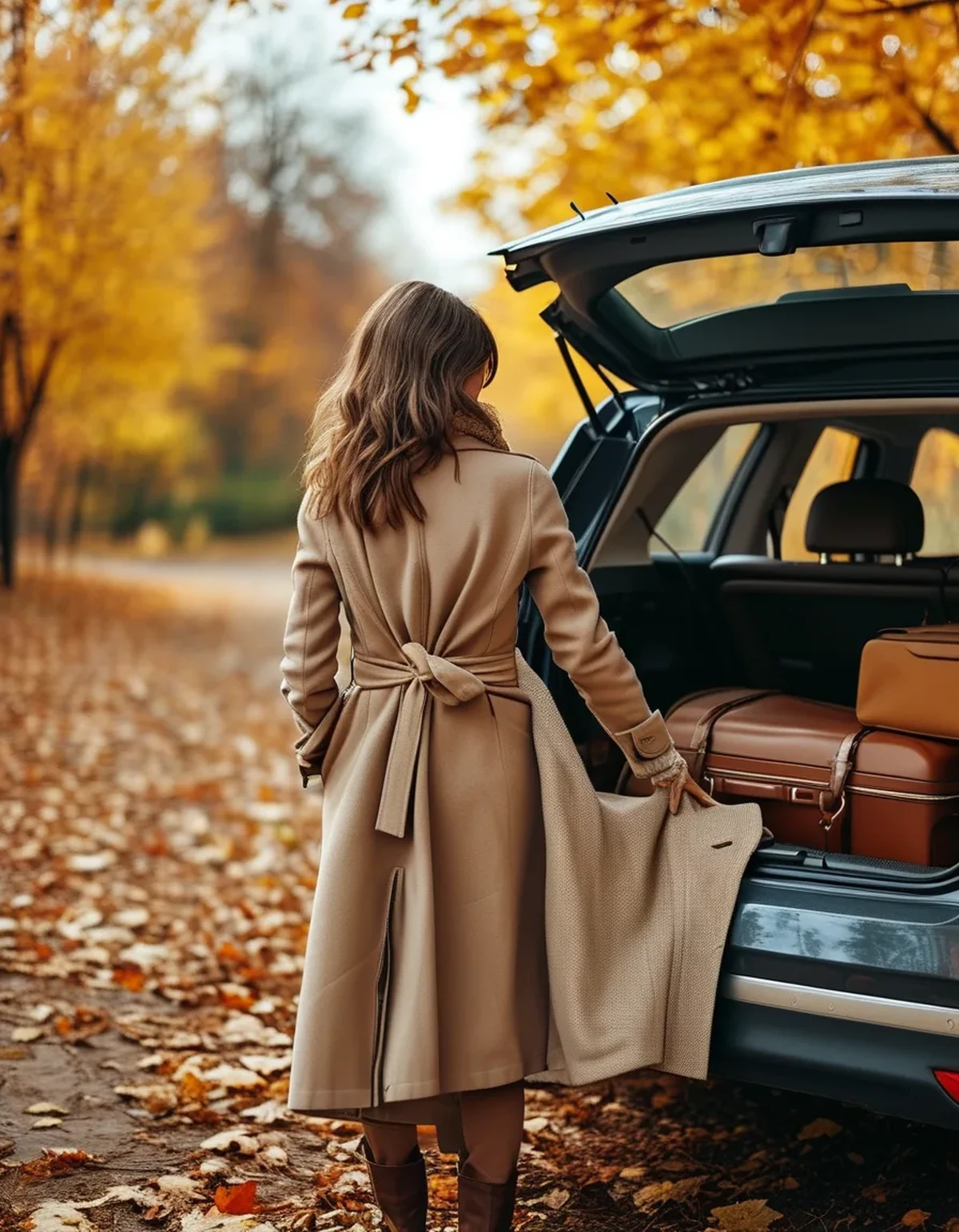
You left the house at 9 in a jacket. By the third stop it is in the passenger seat, and by the fifth you want it again.
Why are errand days harder than a single outing?
Because you are not experiencing one climate - you are experiencing six, in ninety minutes.
Every stop is a different environment. The car after sitting in the sun, the refrigerated aisle of a grocery store, an overheated pharmacy, the parking lot in between. A single outfit is being asked to work across a 30-degree range, not the 15 the forecast implies.
You alternate between sitting still and moving fast. Driving is sedentary and you cool down; carrying bags across a lot is work and you heat up. Your own heat output swings as much as the environment does.
Your hands are occupied. Bags, keys, phone, a cart. A layer that requires two hands and thirty seconds does not get taken off, which means you either overheat or you leave it in the car and get cold.
And the transitions are quick. Two minutes in the car, eight in the store, four in the lot. There is no time to properly adjust, which is why the outfit needs to work reasonably across the whole range rather than perfectly at any point.
Add the September-specific problem: stores turn the heat on before the weather requires it, so indoor environments in early autumn are often warmer than the outdoor air.
What does the base need to be?
Something that is genuinely acceptable at both 58 and 78 degrees, which narrows the options usefully.
Mid-weight, long-length bottom. A full-length legging or a straight-leg jogger around 240 to 280 gsm. Heavy enough for a cool morning, breathable enough for a warm car. Cropped hems are the mistake this month - ankles are the first thing to feel cold at 9am.
A fitted long-sleeve you can push up. Push-up sleeves are the fastest temperature adjustment available and they require no hands to manage afterward. This single feature does more than most layers.
Fabric that does not hold sweat. You will heat up carrying bags and then sit in a cool car. A fabric that stays damp turns that transition unpleasant. Look for anything with real moisture management or natural breathability.
Shoes you can be on your feet in for an hour. Errand days involve more walking than people account for - store aisles, parking lots, stairs. A supportive sneaker beats a slide, and a closed toe beats a sandal now that mornings are cool.
And it should read as put-together on its own. You will be seen by the school pickup line, a neighbor, and possibly a returns counter that requires a conversation. The base needs to work with the layer removed, because for half the day it will be.

5 Mistakes on Transitional Errand Days
Mistake 1: Dressing for the 9am temperature. The morning is the shortest part of the day and the least representative. Dress for the middle of your errand window and carry warmth for the edges.
Mistake 2: Choosing a layer that needs two hands. Cardigans that need buttoning, wraps that need arranging, anything with a complicated closure. A zip or a pullover half-zip can be managed with a cart handle in one hand.
Mistake 3: Leaving the layer in the car. It ends up there because it is inconvenient to carry, and then you are cold in the frozen aisle. A layer that ties at the waist without bulk solves this permanently.
Mistake 4: Wearing something that wrinkles. A layer tied around your waist for two hours emerges creased if it is cotton or linen. Knits and technical fabrics recover; wovens do not.
Mistake 5: Ignoring pockets. Phone, keys, list, receipts, and a card. Errand days are the highest-demand pocket day of the week, and the difference between two functional pockets and none is the difference between a smooth trip and constantly setting things down. At least one zip pocket if you are carrying anything you cannot replace.
What layer works for this specific problem?
The requirements are narrow enough that only a few things qualify.
A lightweight zip jacket. The default, and correct most days. Zip open in the store, zip closed in the lot, tie around the waist when you are carrying bags. Choose one that packs flat.
A mid-weight half-zip pullover. No layer to remove at all - regulate with the zip and pushed sleeves. Fewest moving parts, best for days with many short stops, and nothing to leave behind in a store.
A quilted vest. Warms the core without sleeves that overheat, and the pockets are usually generous. Good for the low 60s rather than the 50s, and it never needs taking off.
A longline knit cardigan in a technical blend. More polished than a jacket, still throwable. It fails only if it needs both hands to manage, so choose one that hangs open rather than one that wraps.
What does not work: heavy sweaters, structured blazers, anything with a hood so bulky it will not tie flat, and denim jackets - which are the classic autumn choice and are heavier, warmer, and less packable than they look. A denim jacket carried for an hour feels like a small piece of furniture.
FAQ: Transitional Errand Outfit Questions, Answered
Do I really need to change anything, or can I just be briefly uncomfortable?
You can, and most people do for about six weeks. The reason it is worth fixing is that this stretch is long enough to matter - roughly a quarter of the season - and the fix is a single well-chosen layer you already might own.
What is the one purchase worth making for this?
A lightweight zip jacket in a technical knit that packs flat and ties without bulk. It solves this window and continues to earn its place through spring.
How do I handle the car being a different temperature than everything else?
Accept that the car is its own climate and dress for the outdoor and indoor ones. Cracking a window during short stops helps more than dressing around it, particularly on sunny afternoons when the car heats fast.
What about days that start cool and then rain?
A water-resistant version of the same zip jacket covers both without adding a second garment. Early autumn rain is usually brief, and a full rain shell is more than most errand days require.
TL;DR:
- Errand days span more than the forecast suggests - cold car, heated store, cool aisle, warm lot, repeatedly.
- Base: mid-weight full-length bottom, a top with sleeves you can push up, breathable fabric, supportive closed shoes.
- The layer must be manageable one-handed, tie without bulk, and not wrinkle from being at your waist for two hours.
- At least two pockets, one zipped - errand days are the highest-demand pocket day of the week.
The outfit that fails is not badly chosen; it is chosen for one moment of a day that has six. Build for the middle of the range, carry one layer that never becomes a burden, and the whole thing stops being something you notice.
Keep Reading
This article is for general informational and styling purposes only. Fit, sizing, and product availability may vary.